
Key Highlights
- Noise-canceling headphones can help children with autism manage sensory sensitivities.
- These headphones reduce auditory overload in noisy environments, improving focus and comfort.
- Choosing the right pair involves assessing comfort, durability, and sound attenuation.
- Real-world examples demonstrate how headphones can support therapy, learning, and daily routines.
- Guidance for caregivers ensures safe and effective use without over-reliance.
For children with autism spectrum disorder (ASD), sensory sensitivities are common, and auditory overload can be overwhelming. Loud or unpredictable sounds may trigger anxiety, meltdowns, or difficulty focusing on tasks. One practical tool that has gained attention in recent years is noise-canceling headphones.
Noise-canceling headphones are designed to reduce background noise, helping children feel calmer, more focused, and in control of their environment. In this guide, we’ll explore how these headphones support children with autism, share examples from therapy sessions, and provide guidance for caregivers on selecting and using the right pair.
Understanding Sensory Sensitivities in Autism
Many children with autism experience hyperacusis, or heightened sensitivity to sound. Everyday noises—like vacuum cleaners, crowded classrooms, or playground chatter—can cause discomfort or even pain.
Example from practice: In our sessions, we observed a 7-year-old child who became visibly distressed when the therapy room was near construction noise. Introducing noise-canceling headphones allowed the child to focus on a fine motor activity without distress, improving engagement and learning outcomes.
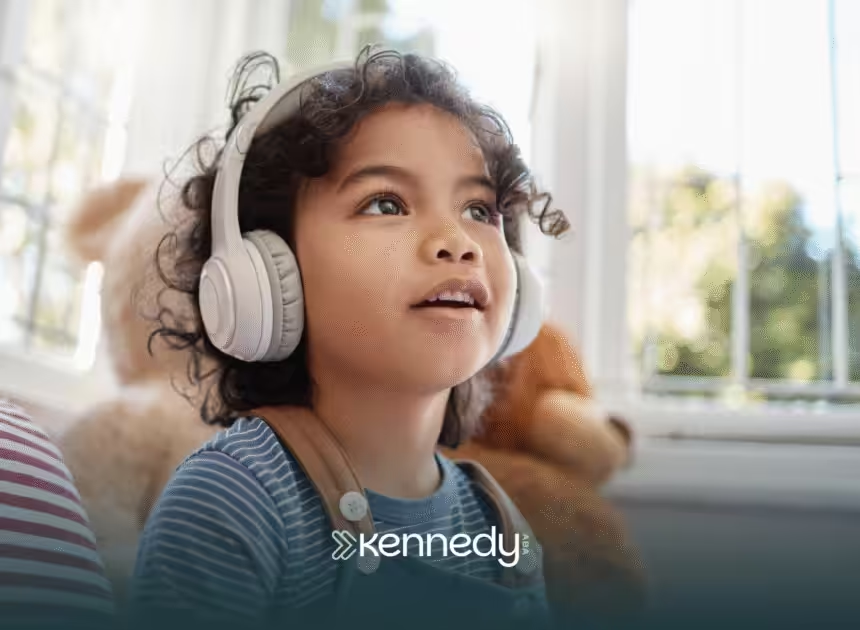
Noise-canceling headphones reduce the auditory input that can overwhelm children with ASD, creating a controlled, calming environment.
Benefits of Noise-Canceling Headphones for Children with Autism
1. Reduce Anxiety and Stress
By limiting exposure to loud or unexpected sounds, headphones can help children remain calm in overstimulating environments.
2. Improve Focus During Therapy
In ABA sessions or classroom settings, reducing background noise allows children to concentrate on tasks and instructions.
Example: During a group ABA activity, a child with sensitivity to chatter was able to participate in matching exercises independently when wearing headphones, completing more trials successfully compared to sessions without headphones.
3. Support Transitions and Daily Routines
Noise-canceling headphones can be used during car rides, doctor visits, or crowded stores, reducing the likelihood of meltdowns and behavioral challenges.
4. Encourage Independence
Children can learn to use headphones as a self-regulation tool, choosing when they need auditory relief.
5. Enhance Sleep and Rest
For children sensitive to nighttime noise, headphones can create a calmer environment, supporting better sleep hygiene.
Choosing the Right Noise-Canceling Headphones
Selecting headphones that meet the needs of a child with autism requires attention to several factors:
| Feature | What to Consider | Example from Practice |
|---|---|---|
| Comfort | Lightweight, padded ear cups, adjustable headband | A child preferred soft, over-ear headphones with memory foam padding, allowing for extended wear during therapy |
| Noise Reduction | Effective passive or active noise cancellation | Active noise-canceling headphones blocked construction noise, enabling a child to complete tasks without distraction |
| Durability | Sturdy materials and chew-resistant components | A child prone to dropping items requires headphones made with reinforced materials |
| Volume Control | Adjustable sound levels to avoid over-amplification | Volume-limiting headphones prevented accidental high-volume exposure while playing audio for learning |
| Ease of Use | Simple buttons or a wireless connection | One child successfully managed headphones independently, using them when needed without adult prompting |
Incorporating Headphones into Therapy
Noise-canceling headphones can be seamlessly integrated into ABA therapy and other interventions:
- During Focused Learning Tasks: Reduce distractions when teaching communication, academic, or social skills.
- For Sensory Breaks: Encourage children to self-regulate by choosing to wear headphones during overwhelming moments.
- Gradual Exposure to Sounds: Combine with desensitization strategies to help children slowly tolerate environmental noises while building coping skills.
Example from practice: A 6-year-old child who struggled with handwashing in a noisy bathroom was gradually exposed to the sound of running water. Using headphones initially, the child tolerated short periods, and over time, the headphones were removed as tolerance improved. This strategy combined auditory support with skill-building goals.
Safety and Best Practices
- Limit Continuous Use: Long-term use can isolate children from important auditory cues in their environment. Encourage breaks and supervised use.
- Monitor Volume Levels: Avoid high volumes to protect hearing, especially with music or audio-based headphones.
- Pair with Skill-Building Strategies: Headphones are a support tool, not a substitute for exposure therapy or coping skills. Use them alongside ABA techniques to teach emotional regulation and attention skills.
- Model Use and Set Expectations: Demonstrate when and how headphones can be used, helping children develop independence and self-awareness.
Case Study: Using Headphones to Support ABA Therapy
- Child Profile: 5-year-old child with autism and hyperacusis
- Challenge: The child became distressed during group activities due to noise from other children.
- Intervention: Noise-canceling headphones were introduced during therapy. The child could participate in a group puzzle activity while wearing headphones.
- Outcome:
- The child completed three times as many task trials as in previous sessions.
- Verbal requests and engagement with peers increased.
- Gradually, the child learned to manage brief periods without headphones, demonstrating improved tolerance to environmental sounds.
This case highlights how headphones can enhance learning and participation when integrated thoughtfully with therapy strategies.
Tips for Caregivers
- Trial Different Styles: Children may respond differently to over-ear, on-ear, or in-ear designs.
- Combine with ABA Goals: Use headphones as part of skill-building exercises rather than as a sole coping mechanism.
- Communicate with Teachers and Therapists: Ensure consistent support across environments.
- Monitor Reactions: Observe if the child shows improved focus, decreased distress, or increased participation.
- Encourage Independence: Teach children to request headphones proactively when needed, fostering self-regulation.
Example from practice: A parent implemented headphones during homework time. Over several weeks, the child independently requested headphones before studying, demonstrating self-awareness and adaptive coping skills.
Final Thoughts
Noise-canceling headphones are a valuable tool for children with autism, supporting sensory regulation, focus, and participation in daily activities. When combined with ABA therapy and other interventions, headphones help children manage auditory sensitivities, build confidence, and thrive in both learning and social environments.
At Kennedy ABA, we’ve seen how thoughtful integration of noise-canceling headphones can transform therapy sessions and daily routines, helping children feel calm, focused, and empowered. Our therapists collaborate with families to identify the right tools and strategies for each child’s unique needs. Reach out today!
FAQs About Noise-Canceling Headphones for Autism
1. Are noise-canceling headphones safe for children with autism?
Yes, when used appropriately with volume monitoring and supervised breaks, they are safe and beneficial.
2. Can headphones replace therapy or coping strategies?
No. Headphones are a supportive tool that works best when combined with ABA therapy, skill-building exercises, and desensitization techniques.
3. How long should a child wear noise-canceling headphones?
Usage should be limited to sessions of need or sensory overload. Encourage breaks to avoid isolation from environmental sounds.
4. Which type of noise-canceling headphones is best?
Over-ear, padded headphones with adjustable headbands and volume control are generally most comfortable and effective for children.
5. How can caregivers encourage independence with headphones?
Teach children to request headphones proactively, explain when they are appropriate, and allow self-management under supervision.
Sources:
- https://www.autismspeaks.org/sensory-issues
- https://nationalautismresources.com/self-regulation/
- https://autism.org/wp-content/uploads/2022/03/Emotional-Regulation-March-2022.pdf
- https://www.theautismservice.co.uk/news/asd-and-bedtime/
- https://www.sciencedirect.com/science/article/abs/pii/S1755599X23001234