
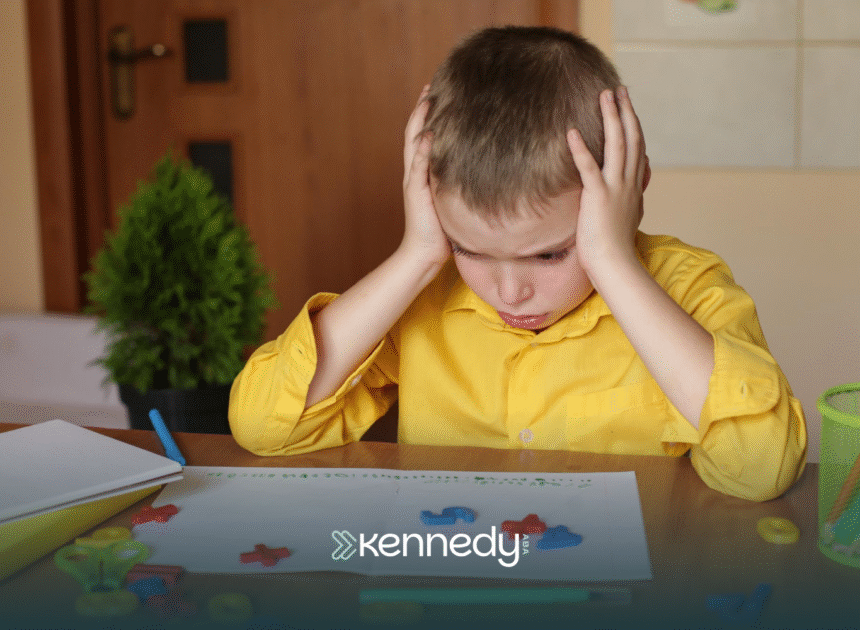
Autism overstimulation occurs when a child’s senses are overwhelmed by their environment. This can involve lights, sounds, textures, or even social interactions. Overstimulation can feel intense, confusing, or distressing for children on the spectrum, often leading to anxiety, frustration, or meltdowns.
Common signs of overstimulation include:
- Covering ears or eyes
- Repetitive movements or self-soothing behaviors
- Increased irritability or anger
- Withdrawal from social interaction
- Difficulty focusing or following instructions
Managing overstimulation focuses on reducing triggers and providing coping strategies. Creating calm, structured environments, using noise-canceling headphones, offering fidget toys, and maintaining predictable routines can help children regulate their sensory input. Teaching coping strategies through visual schedules or calming techniques also reduces distress.
ABA therapy (Applied Behavior Analysis) can provide personalized strategies to help children recognize and manage sensory overload, improving emotional regulation and daily functioning.
With the right support, children can learn to better manage sensory overload and feel more comfortable in their daily environments. Working with experienced providers like Kennedy ABA helps families develop individualized strategies that reduce triggers, build coping skills, and support long-term emotional regulation.
Frequently Asked Questions
1. Can overstimulation cause meltdowns?
Yes. Sensory overload can trigger emotional outbursts or shutdowns.
2. How can I prevent overstimulation?
Use predictable routines, reduce sensory triggers, and provide calming tools.
3. Does every child with autism experience overstimulation?
Not every child, but it is common, and severity varies widely.
Sources:
- https://autismspectrumnews.org/four-faces-of-overstimulation/
- https://pubmed.ncbi.nlm.nih.gov/37988775/