
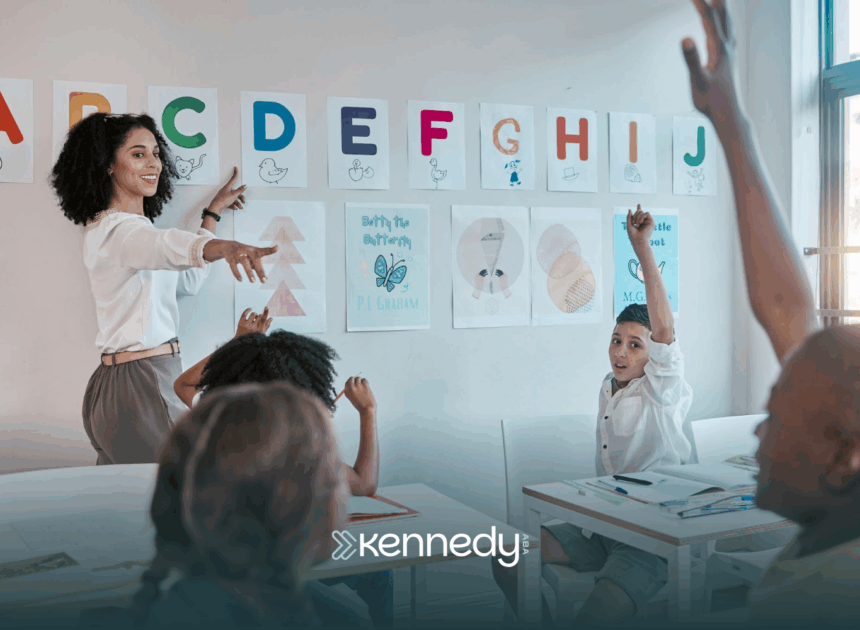
Many parents wonder if ABA therapy can replace school for their child. The short answer: no. ABA therapy is a powerful tool that teaches social skills, communication, and daily living skills, but it does not provide the full academic curriculum offered in schools.
ABA can supplement education by reinforcing skills learned in school, helping with attention, behavior management, and individualized learning goals. For children with autism, ABA can improve school readiness, making transitions smoother and supporting success in the classroom.
Some families explore homeschooling with intensive ABA, but even then, state education requirements must be met. ABA alone cannot provide the social interactions, exposure to diverse subjects, and standardized learning experiences that schools offer.
For the best outcomes, ABA therapy should complement school, not replace it. Working together, therapy and education can help children with autism thrive academically, socially, and emotionally.
At Kennedy ABA, we guide families on how to integrate therapy with school to maximize learning and development for every child.
Frequently Asked Questions
1. Can ABA teach reading and math?
ABA can support learning concepts, but does not replace a school curriculum.
2. Is ABA enough for social development?
ABA strengthens social skills, but school provides peer interaction in a real-world setting.
3. Can a child do ABA full-time instead of school?
Full-time ABA cannot meet state educational requirements; it’s best used alongside school.
Sources:
- https://pmc.ncbi.nlm.nih.gov/articles/PMC9788712/
- https://www.autismspeaks.org/applied-behavior-analysis