
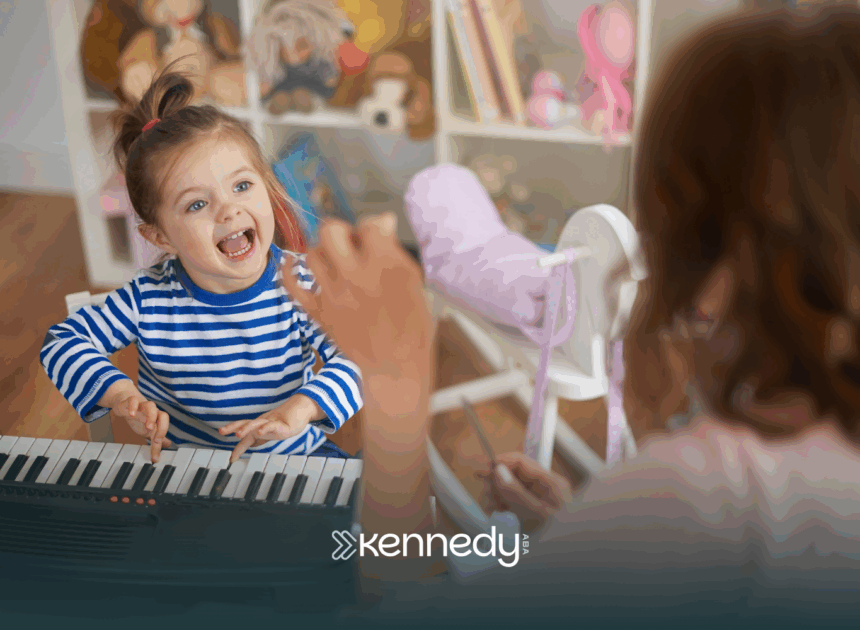
Music can be a powerful tool for children with autism, offering benefits across communication, social interaction, and emotional regulation. Many autistic children respond strongly to rhythm, melody, and repetition, which can make learning more engaging and enjoyable.
Key benefits of music for autistic children:
- Communication skills: Singing and rhythm activities can improve speech, vocabulary, and turn-taking.
- Social interaction: Group music sessions encourage cooperation, eye contact, and shared attention.
- Emotional regulation: Listening to or creating music can reduce anxiety, provide comfort, and help children express feelings.
- Motor and cognitive skills: Playing instruments or clapping to beats enhances coordination, attention, and memory.
Music therapy is not a cure, but when combined with interventions like ABA therapy, it can reinforce learning and promote overall development.
Families seeking structured support often find that integrating music into therapy sessions can make progress more enjoyable and effective, especially under guidance from specialists like Kennedy ABA, who tailor approaches to each child’s unique strengths.
Frequently Asked Questions
1. Can music replace ABA therapy for autistic children?
No, music complements therapy but does not replace evidence-based interventions.
2. At what age can children benefit from music therapy?
Children of all ages can benefit, from toddlers to adolescents.
3. Does any type of music work for autistic children?
Preferences vary; using familiar or preferred music usually works best.
Sources:
- https://pmc.ncbi.nlm.nih.gov/articles/PMC12602440/
- https://www.sciencedirect.com/science/article/pii/S0891422225000265