Key Highlights
- In-home ABA therapy provides personalized support in a child’s natural environment.
- Familiar settings help reduce anxiety and improve engagement during sessions.
- Skills are practiced in real-life routines like meals, playtime, and daily tasks.
- Parent involvement is higher, helping reinforce strategies outside therapy.
- Research shows improvements in communication, social skills, and behavior.
- Families benefit from flexible scheduling and reduced travel stress.
Applied Behavior Analysis (ABA) therapy has long been recognized as one of the most effective interventions for children on the autism spectrum. While clinic-based therapy has traditionally been the standard, in-home ABA therapy is rapidly gaining attention for its ability to deliver personalized, practical, and flexible support within a child’s own environment.
This blog explores the effectiveness of in-home ABA therapy, backed by evidence, case examples, and practical insights from professionals working directly with families.
What is In-Home ABA Therapy?
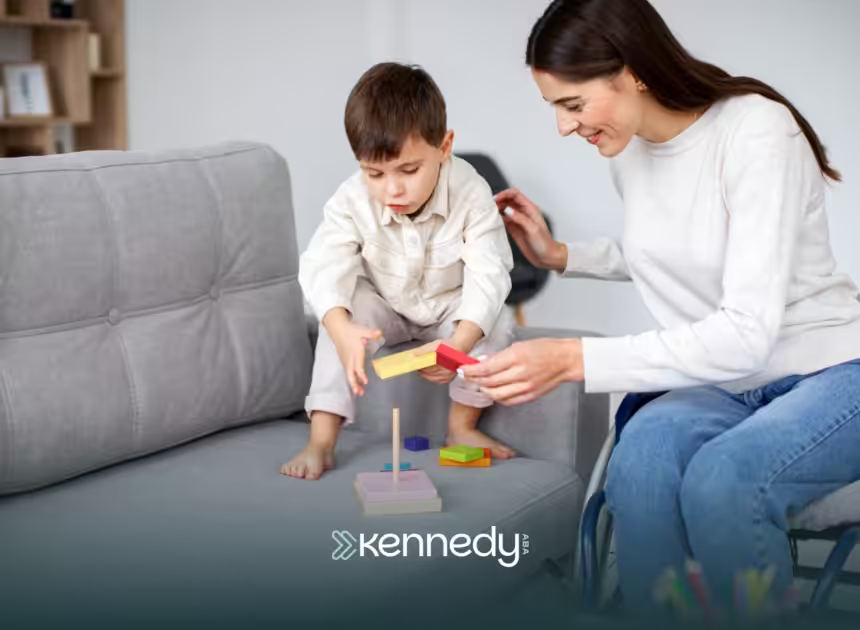
In-home ABA therapy is a structured behavioral intervention delivered directly in a child’s home. Certified therapists visit families and work one-on-one with the child, integrating therapy into daily routines, playtime, and social interactions.
Benefits of the home setting include:
- Familiar surroundings that reduce anxiety and distractions
- Opportunities to practice skills in real-life contexts
- Increased engagement from both child and family members
In our sessions, we’ve noticed that children often respond more positively to therapy when it takes place in a familiar setting. For example, teaching a child to request snacks or toys is more effective at home, where these items naturally exist, than in a clinic simulation.
Evidence Supporting In-Home ABA Therapy
Research indicates that the environment plays a crucial role in skill acquisition and generalization. Studies show that children receiving ABA therapy at home often demonstrate:
- Faster mastery of daily living skills
- Improved social interactions with family members
- Better maintenance of learned behaviors over time
A meta-analysis concluded that children receiving in-home ABA therapy made statistically significant gains in communication and social skills compared to children receiving clinic-based therapy only.
Key Advantages of In-Home ABA Therapy
1. Personalized, Child-Centered Approach
Therapists can tailor sessions to the child’s specific interests, strengths, and challenges. By observing the child in their home environment, therapists gain valuable insights into daily triggers, preferred activities, and learning styles.
Example: During a session, a child resistant to sharing toys at school demonstrated cooperative play when practicing with a sibling at home, showing the power of context-specific interventions.
2. Faster Skill Generalization
Generalization is the ability to transfer a learned skill to different settings. In-home therapy ensures skills are immediately practiced in the natural context where they will be used.
| Skill Area | Clinic-Based Therapy | In-Home Therapy |
|---|---|---|
| Communication | Learned in structured sessions | Practiced during meals, playtime, and family interactions |
| Social Skills | Role-played with peers or therapists | Applied with siblings, parents, and neighbors |
| Daily Living | Taught via worksheets or simulations | Practiced with real tasks like dressing, brushing teeth, and chores |
3. Strong Parent Involvement
In-home ABA therapy often includes parent coaching, empowering caregivers to continue strategies outside of therapy sessions. Parents learn to prompt, reinforce, and track behaviors, making interventions more consistent and effective.
In our sessions, parents who actively implement ABA techniques at home report faster progress and higher confidence in managing behaviors.
4. Flexible Scheduling and Reduced Stress
Traveling to clinics can be challenging for families, especially those balancing multiple appointments or caring for multiple children. In-home therapy provides flexibility and convenience while reducing stress for both the child and caregivers.
Real-Life Case Studies
Case Study 1: Communication Skills
A 5-year-old nonverbal child showed minimal progress in clinic-based therapy. When therapy moved home:
- Daily routines became learning opportunities
- Within 6 months, the child began using basic signs and gestures to request items
- Parents reported increased confidence in communication at home and in public
Case Study 2: Reducing Challenging Behaviors
A 7-year-old frequently displayed aggression during transitions at school. In-home therapy allowed the therapist to observe triggers in the natural environment:
- Personalized visual schedules and reinforcement strategies were implemented at home
- Aggressive behaviors decreased by 60% in three months
- Skills were successfully generalized to school, with coordination between home and teachers
Case Study 3: Social Engagement
A 4-year-old with limited social interaction benefited from in-home ABA therapy focused on sibling play and neighbor interactions:
- Initiating greetings, sharing toys, and turn-taking improved significantly
- Therapists worked with parents to reinforce positive social behaviors during family meals and playdates
Measuring Effectiveness in In-Home ABA Therapy
Effectiveness is measured through a combination of direct observation, data tracking, and parent feedback. Common metrics include:
- Skill acquisition rates (e.g., new words learned, tasks completed independently)
- Frequency and intensity of challenging behaviors
- Generalization of skills across environments
- Parent confidence and engagement
In our experience, weekly progress reports help families visualize improvements, increasing motivation and adherence to therapy plans.
Common Misconceptions About In-Home ABA Therapy
-
Misconception 1: Home therapy is less structured.
Reality: Sessions are highly structured, data-driven, and based on individualized treatment plans. -
Misconception 2: Therapists can’t observe peer interactions.
Reality: In-home therapy can include community outings, playdates, and coordinated sessions to support social skill development. -
Misconception 3: Clinic therapy is always better.
Reality: Many children thrive when therapy occurs in natural environments, as skills are immediately functional and relevant.
Tips for Maximizing the Effectiveness of In-Home ABA Therapy
- Maintain consistency: Schedule sessions at regular times to establish a routine.
- Engage all family members: Encourage siblings and caregivers to participate when appropriate.
- Track progress: Use data sheets or apps to monitor skill acquisition and behaviors.
- Communicate regularly: Therapists should provide detailed feedback and collaborate with parents and educators.
- Adapt interventions: Modify strategies based on ongoing observations to meet evolving needs.
In-Home ABA Therapy vs. Clinic-Based Therapy: Summary
| Feature | In-Home Therapy | Clinic-Based Therapy |
|---|---|---|
| Environment | Natural home setting | Simulated clinic environment |
| Parent Involvement | High | Moderate |
| Generalization | Immediate and practical | Often delayed |
| Flexibility | High | Limited |
| Stress Level | Lower for families | Higher due to travel and unfamiliar settings |
The table illustrates why many families see superior outcomes with in-home ABA therapy while maintaining structured, evidence-based interventions.
Final Thoughts
In-home ABA therapy offers a powerful, flexible, and highly effective approach to helping children with autism reach their full potential. By leveraging natural environments, involving parents, and providing personalized, data-driven interventions, children can make measurable gains in communication, social, and daily living skills.
Families who have engaged in in-home ABA therapy often report faster progress, greater skill generalization, and a more positive experience overall. The hands-on, practical nature of in-home therapy ensures that learning is meaningful, consistent, and directly applicable to real life.
For families seeking a proven, personalized approach, in-home ABA therapy is a highly effective option. Kennedy ABA works closely with families to implement these strategies in the comfort of their own homes, ensuring every child has the support they need to thrive. Contact us today!
Frequently Asked Questions
1. How often should in-home ABA therapy sessions occur?
Frequency depends on the child’s needs, typically ranging from 10 to 40 hours per week for intensive therapy.
2. Can in-home ABA therapy work for older children?
Yes. In-home therapy is effective for children and adolescents, particularly for functional skill development and behavior management.
3. Is parent training included in in-home ABA therapy?
Absolutely. Parent coaching is a core component, empowering families to reinforce skills between sessions.
4. How long before I see progress?
Many families notice improvements within a few months, though results vary based on intensity, consistency, and individual needs.
5. Does insurance cover in-home ABA therapy?
Coverage depends on your provider and plan. Many insurance companies, including Medicaid and private plans, cover in-home ABA therapy if it is deemed medically necessary.
Sources:
- https://pmc.ncbi.nlm.nih.gov/articles/PMC9374634/
- https://www.sciencedirect.com/science/article/abs/pii/S0272735810000218
- https://www.motivity.net/blog/generalization-in-aba
- https://www.appliedbehavioranalysisedu.org/why-is-routine-so-important-to-people-with-asd/
- https://pmc.ncbi.nlm.nih.gov/articles/PMC9458805/