
Key Highlights
- Pets can support emotional regulation, social skills, and daily routines
- Different pets offer different benefits depending on a child’s sensory needs
- Structure and predictability help children with autism bond with animals
- Not every pet is right for every child—careful selection matters
- ABA-informed strategies can help children learn responsibility and care
- Safety, supervision, and realistic expectations are essential
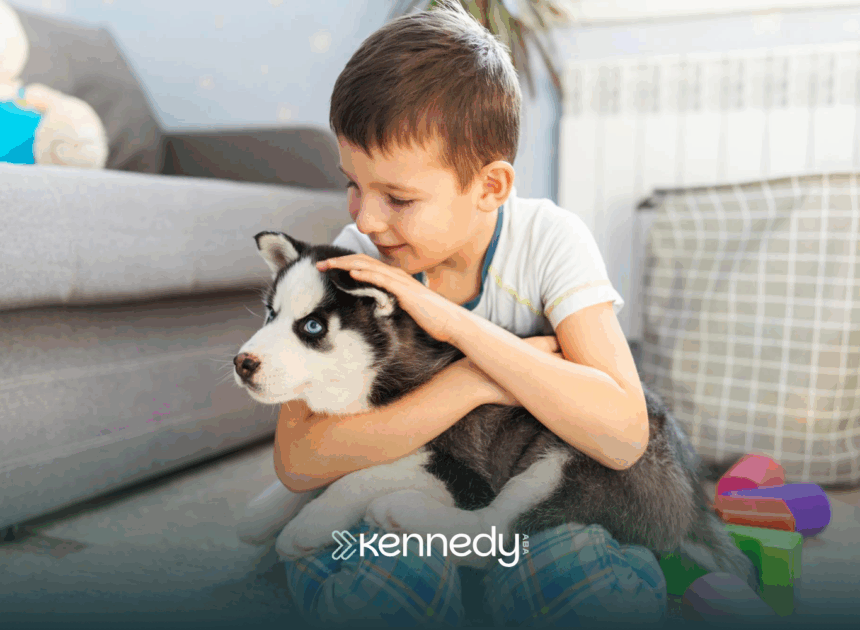
For many families, bringing a pet into the home is more than adding an animal—it’s welcoming a new source of comfort, connection, and routine. For children on the autism spectrum, pets can play a uniquely powerful role. Research and lived experience show that pets for autistic children can support emotional regulation, social development, and overall well-being when thoughtfully chosen and introduced.
This guide explores the benefits of pets for autistic children, how to choose the right animal, and practical tips to ensure a positive, supportive experience for both your child and the pet.
Why Pets Can Be Beneficial for Autistic Children
Children with autism often experience the world differently, particularly when it comes to communication, sensory processing, and social interaction. Pets can provide a unique form of companionship that feels safe and nonjudgmental.
- Unconditional Acceptance: Animals do not judge, criticize, or expect verbal communication. This can be especially comforting for children who struggle with social cues or expressive language.
- Predictable Interactions: Pets often respond in consistent ways. This predictability can feel reassuring to autistic children who thrive on routine and structure.
- Emotional Regulation: Interacting with animals—such as petting a dog or watching fish swim—can have a calming effect, helping reduce anxiety and stress.
Emotional Benefits of Pets for Autistic Children
- Reduced Anxiety and Stress: Spending time with pets has been shown to lower cortisol levels and promote relaxation. For autistic children who experience heightened anxiety, pets can serve as a grounding presence.
- Increased Sense of Security: A pet can help a child feel less alone, especially during challenging moments like bedtime, transitions, or changes in routine.
- Comfort During Emotional Overwhelm: Some children naturally seek out their pets when feeling overwhelmed, using them as a source of comfort and regulation.
Social and Communication Benefits
1. Encouraging Communication
Pets can motivate children to use words, gestures, or communication devices. For example:
-
Giving simple commands (“sit,” “come”)
-
Labeling actions (“dog running,” “cat sleeping”)
-
Practicing requests (“feed fish,” “walk dog”)
2. Supporting Social Interaction
Pets often become a shared interest, making it easier for children to connect with peers or family members through conversation about the animal.
3. Building Empathy
Caring for an animal helps children recognize emotions and needs outside of themselves, which supports emotional awareness and empathy development.
Routine and Responsibility
Many children with autism benefit from structured routines, and pets naturally create opportunities for predictable daily activities.
Examples include:
- Feeding times
- Walk schedules
- Cleaning habitats
- Grooming routines
These tasks can be broken down into simple steps and supported with visual schedules, making them excellent learning opportunities.
Choosing the Right Pet for an Autistic Child
Not all pets are equally suitable for every child. The best choice depends on your child’s sensory preferences, energy level, and developmental needs.
Sensory Considerations
Ask yourself:
- Does your child enjoy touch or prefer minimal physical contact?
- Are loud noises distressing?
- Is your child sensitive to smells or textures?
Matching a pet’s characteristics to your child’s sensory profile is critical.
Common Pets for Autistic Children and Their Benefits
| Pet Type | Potential Benefits | Considerations |
|---|---|---|
| Dogs | Emotional support, companionship, routine | Require time, training, and noise tolerance |
| Cats | Calm presence, lower maintenance | May dislike too much handling |
| Fish | Visual calming, low noise | Limited interaction |
| Guinea Pigs | Gentle, tactile, social | Need regular cleaning |
| Rabbits | Quiet, soft, predictable | Fragile, requires gentle handling |
| Reptiles | Low sensory stimulation | Less interactive |
1. Dogs: Loyal and Emotionally Supportive
Dogs are one of the most popular pets for autistic children due to their loyalty and ability to form strong bonds.
Benefits
- Encourage physical activity
- Offer emotional comfort
- Can be trained to respond predictably
Some families explore service or therapy dogs, which are specially trained to support children with autism.
Considerations
- Dogs require daily care and training
- Barking and high energy may be overwhelming for some children
2. Cats: Calm and Independent Companions
Cats can be a good match for children who prefer quieter environments.
Benefits
- Lower maintenance than dogs
- Calming presence
- Often enjoy predictable routines
Considerations
- Cats may resist frequent touching
- Scratching or sudden movements can startle some children
3. Small Animals and Low-Sensory Pets
Fish: Fish are ideal for children who enjoy visual stimulation without physical interaction.
Benefits include:
- Calming effect
- No noise
- Simple routines
Guinea Pigs and Rabbits: These animals can be gentle and social, offering opportunities for supervised handling and bonding.
Teaching Pet Care Using ABA-Informed Strategies
ABA-based approaches can help children learn pet care skills in a structured, supportive way.
Task Analysis
Break pet care into simple steps:
- Get food
- Measure portion
- Put food in a bowl
- Clean up
Visual Supports
Use:
- Picture schedules
- Checklists
- Step-by-step charts
Positive Reinforcement
Reinforce successful interactions with:
- Praise
- Stickers
- Preferred activities
This helps build responsibility while keeping learning positive.
Safety and Supervision
Safety should always be a top priority.
Tips include:
- Supervising all interactions
- Teaching gentle touch
- Creating pet-free safe spaces for both child and animal
- Monitoring for signs of stress in pets
Children and pets both need boundaries to feel secure.
Preparing Your Child for a New Pet
Use Social Stories
Social stories can explain:
- What the pet will do
- How to interact safely
- What sounds or movements to expect
Visit Before Committing
If possible:
- Visit a shelter
- Spend time with the animal
- Observe your child’s reactions
This helps set realistic expectations.
Managing Challenges
Even with preparation, challenges can arise.
Common issues include:
- Fear or avoidance
- Overstimulation
- Difficulty with consistency
If challenges occur:
- Slow down introductions
- Adjust expectations
- Focus on small successes
Not every pet relationship looks the same, and that’s okay.
Long-Term Benefits of Pets for Autistic Children
Over time, pets can support:
- Increased confidence
- Improved emotional regulation
- Greater independence
- Stronger family bonds
The relationship often grows alongside the child, adapting to their needs and strengths.
Is a Pet Right for Every Autistic Child?
Not necessarily. Some children may find animals overwhelming or stressful. The decision should always prioritize:
- The child’s comfort
- The family’s ability to care for the pet
- The animal’s well-being
Choosing not to have a pet is just as valid as choosing to bring one home.
Final Thoughts
Pets for autistic children can be powerful companions, offering comfort, routine, and meaningful growth opportunities. With thoughtful selection, preparation, and ongoing support, the relationship between a child and a pet can be greatly rewarding.
Families seeking structured guidance on building life skills, routines, and positive behaviors—including pet care and responsibility—may benefit from working with experienced ABA professionals. Kennedy ABA specializes in individualized autism therapy and family-centered support. Reach out today!
Frequently Asked Questions
1. What is the best pet for an autistic child?
There is no single “best” pet. The right choice depends on your child’s sensory needs, interests, and your family’s lifestyle.
2. Can pets help with anxiety in autistic children?
Yes. Many children experience reduced anxiety and improved emotional regulation when interacting with pets.
3. Are service animals necessary?
Not always. While service animals can be beneficial, many families find success with traditional household pets.
4. How can I teach my child to care for a pet?
Use visual schedules, step-by-step instructions, and positive reinforcement to teach pet care skills gradually.
5. What if my child loses interest in the pet?
Interest can fluctuate. Adults should always be prepared to take primary responsibility for pet care if needed.
Sources:
- https://pmc.ncbi.nlm.nih.gov/articles/PMC10373301/
- https://www.autism.org.uk/advice-and-guidance/topics/about-autism/preference-for-order-predictability-or-routine
- https://www.autismspeaks.org/sensory-issues
- https://www.autismparentingmagazine.com/dogs-impact-kids-with-autism/
- https://www.nature.com/articles/s41598-025-89171-1