
Key Highlights
- Autistic children often have unique sensory needs, ranging from over- (hypersensitive) to under-responsiveness (hyposensitive).
- Sensory differences affect attention, behavior, social interaction, and daily living skills.
- ABA therapy combined with sensory strategies helps children manage sensitivities and build adaptive skills.
- Practical supports include sensory-friendly environments, adaptive tools, routines, and movement breaks.
- Observing patterns and maintaining consistency across home, school, and community enhances effectiveness.
- Addressing sensory needs leads to reduced anxiety, improved self-regulation, and increased participation in daily activities.
Sensory processing differences are common among autistic children. These differences affect how a child perceives, interprets, and responds to sensory input such as sights, sounds, textures, and movement. Recognizing and supporting these sensory needs is crucial for their development, learning, and overall well-being.
This guide explores sensory needs in autistic children, practical strategies to support them, and real-life examples of how interventions can improve daily life.
What Are Sensory Needs?
Sensory needs refer to the ways children respond to sensory stimuli. Autistic children may be:
- Hypersensitive (over-responsive): Sensitive to sounds, lights, textures, or movement
- Hyposensitive (under-responsive): May seek out intense sensory input or appear unresponsive
In our sessions, we’ve seen children who cover their ears in noisy environments gradually tolerate sounds with structured sensory strategies and ABA interventions.
Sensory needs can affect:
- Attention and focus
- Emotional regulation
- Social interactions
- Daily activities like dressing, eating, or participating in school
Types of Sensory Processing Differences
- Auditory: Difficulty with loud noises, background chatter, or specific frequencies
- Visual: Sensitivity to bright lights, crowded spaces, or rapid movement
- Tactile: Discomfort with clothing textures, hair brushing, or certain materials
- Gustatory/Oral: Aversion to specific tastes or textures of food
- Olfactory: Sensitivity to smells, perfumes, or strong scents
- Vestibular: Challenges with balance, movement, or coordination
- Proprioceptive: Difficulty with body awareness, strength, or spatial orientation
Example: A child who avoided playground swings due to vestibular sensitivity was gradually introduced to gentle swinging with therapist support, eventually enjoying playground activities without distress.
Why Understanding Sensory Needs Matters
Supporting sensory needs has a direct impact on:
- Behavior: Reducing meltdowns or self-injurious behavior linked to sensory overload
- Learning: Improving focus and engagement during school or therapy
- Socialization: Enabling participation in peer activities and daily routines
- Daily Living: Making tasks like dressing, eating, or grooming more manageable
In our sessions, addressing tactile sensitivity with adaptive clothing significantly improved a child’s ability to dress independently without frustration.
ABA Therapy and Sensory Integration
ABA therapy (Applied Behavior Analysis) can help children manage sensory needs through structured interventions:
- Desensitization: Gradually exposing children to challenging sensory stimuli
- Positive reinforcement: Encouraging adaptive responses to sensory experiences
- Data-driven strategies: Tracking responses to tailor interventions
- Functional assessments: Identifying triggers that lead to challenging behavior
Real Example: A 6-year-old with auditory hypersensitivity avoided group activities. Through ABA strategies, including gradual exposure and reinforcement, the child learned to tolerate classroom noise and participate actively in group lessons.
Practical Strategies for Parents and Caregivers
1. Create Sensory-Friendly Environments
- Reduce noise and visual distractions at home
- Use soft lighting or adjustable shades
- Offer quiet spaces for breaks when overstimulated
2. Provide Sensory Tools
- Weighted blankets or lap pads
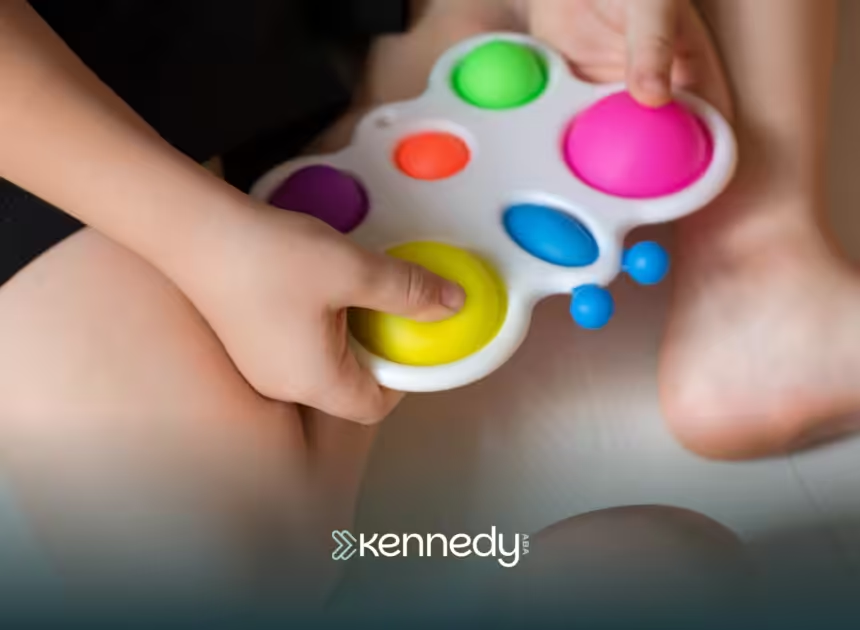
- Fidget toys or chewable jewelry
- Noise-cancelling headphones
3. Establish Routines
- Predictable daily schedules reduce sensory overwhelm
- Visual schedules and timers help children anticipate transitions
4. Integrate Movement and Breaks
- Incorporate gross motor activities like jumping, swinging, or climbing
- Schedule short sensory breaks during homework or therapy sessions
Common Sensory Responses and Intervention Strategies
| Sensory Type | Possible Response | Intervention Strategy |
|---|---|---|
| Auditory | Covers ears, distress in noisy environments | Noise-cancelling headphones, gradual exposure |
| Visual | Squints, avoids bright lights or screens | Adjust lighting, use sunglasses indoors if needed |
| Tactile | Refuses certain clothing, avoids touching textures | Offer soft fabrics, gradual tactile play |
| Gustatory/Oral | Limited diet, refuses foods | Introduce foods gradually, use preferred textures |
| Vestibular | Avoids swings or climbing | Gradual introduction, supervised play |
| Proprioceptive | Slouches, bumps into objects | Activities that improve body awareness, such as weighted objects |
In our sessions, combining sensory strategies with ABA interventions helped children generalize coping skills across home, school, and community settings.
Case Studies
Case Study 1: Auditory Sensitivity
- Background: A 5-year-old child was distressed by classroom noise, affecting participation.
- Intervention: Noise-cancelling headphones and gradual exposure with reinforcement.
- Outcome: Child attended group lessons with minimal distress and actively participated.
Case Study 2: Tactile Sensitivity
- Background: A 7-year-old refused to wear school uniforms due to fabric discomfort.
- Intervention: Introduced adaptive clothing and tactile play at home.
- Outcome: Child began wearing uniforms comfortably and participated in school activities.
Case Study 3: Vestibular Sensitivity
- Background: Avoided playground swings, limiting social interactions.
- Intervention: Gradual swinging with support and reinforcement.
- Outcome: Child now enjoys swings and interacts with peers during playtime.
Supporting Sensory Needs in School and Community
- Collaborate with teachers and school staff to create sensory-friendly classrooms
- Provide access to quiet spaces and sensory tools
- Educate peers on diversity and sensory differences to foster understanding
- Encourage community outings gradually with adaptive strategies in place
Tips for Parents
- Observe patterns of sensory sensitivity and preference
- Maintain consistency in strategies across home, school, and community
- Collaborate closely with therapists and educators
- Use reinforcement and praise for adaptive responses
- Track progress to adjust interventions as the child develops
In our sessions, children whose families actively applied sensory strategies at home showed faster regulation and improved engagement during therapy.
Myths About Sensory Needs in Autism
-
Sensory sensitivities are just behavioral issues.
-
Reality: These are neurological differences affecting perception and response.
-
-
All children with autism have the same sensory challenges.
-
Reality: Sensory profiles are highly individualized; each child’s sensitivities vary.
-
-
Children will “grow out” of sensory sensitivities.
-
Reality: Structured strategies and interventions support adaptation, but sensitivities often persist without support.
-
Long-Term Benefits of Supporting Sensory Needs
- Reduced anxiety and frustration
- Increased participation in social and learning activities
- Improved self-regulation and independence
- Enhanced quality of life for child and the family
Example: A 6-year-old with tactile, auditory, and vestibular sensitivities improved self-regulation and engagement at school and home after six months of ABA therapy combined with sensory integration strategies.
Final Thoughts
Understanding and supporting sensory needs is critical for autistic children’s development and well-being. By identifying sensitivities, implementing structured strategies, and integrating ABA interventions, families can help children navigate sensory challenges, participate in daily activities, and thrive socially and academically.
Kennedy ABA works closely with families to create individualized plans addressing sensory needs, combining ABA therapy, sensory integration strategies, and parent education to empower children to succeed in all areas of life. Contact us today!
Frequently Asked Questions
1. What are the sensory needs of autistic children?
Sensory needs refer to how autistic children perceive, interpret, and respond to sensory input, which may include over- or under-sensitivity to sound, touch, movement, or other stimuli.
2. How can parents support sensory needs at home?
Parents can create sensory-friendly environments, provide adaptive tools, schedule predictable routines, and integrate movement or sensory breaks.
3. Can ABA therapy help with sensory challenges?
Yes. ABA interventions, combined with sensory strategies, help children develop adaptive coping skills and reduce behavioral challenges.
4. Do all autistic children have the same sensory sensitivities?
No. Sensory profiles are highly individualized, and strategies should be tailored to each child’s unique needs.
5. How long does it take to see progress with sensory interventions?
Progress varies, but with consistent strategies and ABA therapy, improvements in self-regulation and participation can often be observed within weeks to months.
Sources:
- https://pmc.ncbi.nlm.nih.gov/articles/PMC10687592/
- https://www.autismspeaks.org/sensory-issues
- https://littlechampsaba.com/blog/noise-canceling-headphones-for-autism/
- https://www.autismparentingmagazine.com/creating-visual-schedules/
- https://autism.org/sensory-integration/