
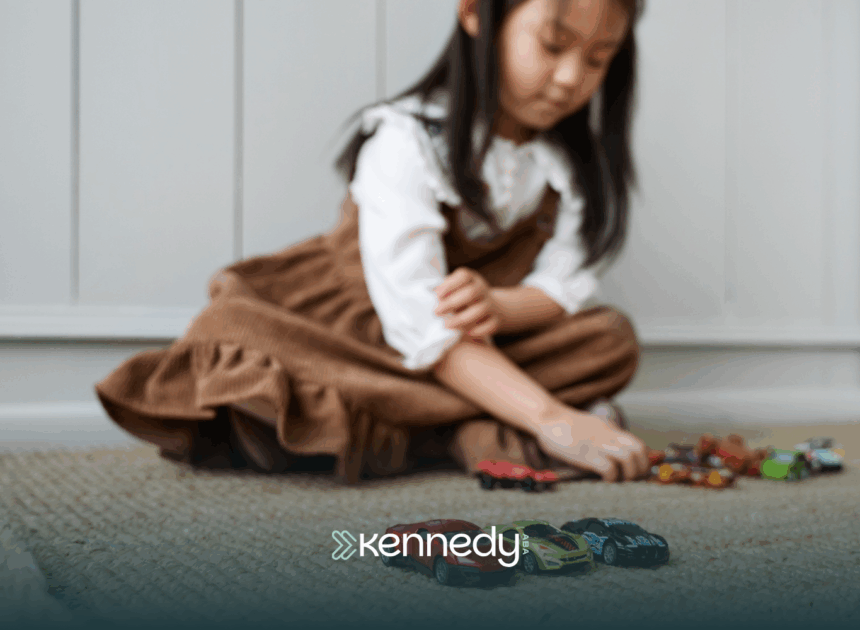
Many parents ask, why do kids with autism line up toys? This behavior is common and often serves an important purpose for the child.
Lining up toys can help autistic children create order and predictability in a world that may feel overwhelming. The repetition and structure can be calming and reduce anxiety. For some children, it’s also a way to explore patterns, shapes, colors, or spatial relationships, which supports cognitive development.
This behavior may also reflect differences in play and communication skills. Instead of imaginative play, some children prefer organizing objects because it feels more manageable and rewarding. In other cases, lining up toys can be a form of self-regulation, helping the child stay focused or relaxed.
While lining up toys is not harmful on its own, professionals may gently encourage flexibility and social play when appropriate to support broader skill development.
With the right guidance, this behavior can be used as a starting point for learning and engagement. Kennedy ABA helps families understand these behaviors and build skills through individualized, evidence-based ABA therapy.
Frequently Asked Questions
1. Is lining up toys a sign of autism?
It can be associated with autism, but on its own, it does not mean a child is autistic.
2. Should I stop my child from lining up toys?
Not necessarily. It’s often helpful to respect the behavior while gently introducing new ways to play.
3. Can ABA therapy help with this behavior?
Yes, ABA therapy can help expand play skills while honoring a child’s needs and interests.
Sources:
- https://www.autism.org.uk/advice-and-guidance/topics/about-autism/preference-for-order-predictability-or-routine
- https://nationalautismcenter.org/autism/what-does-autism-look-like/